
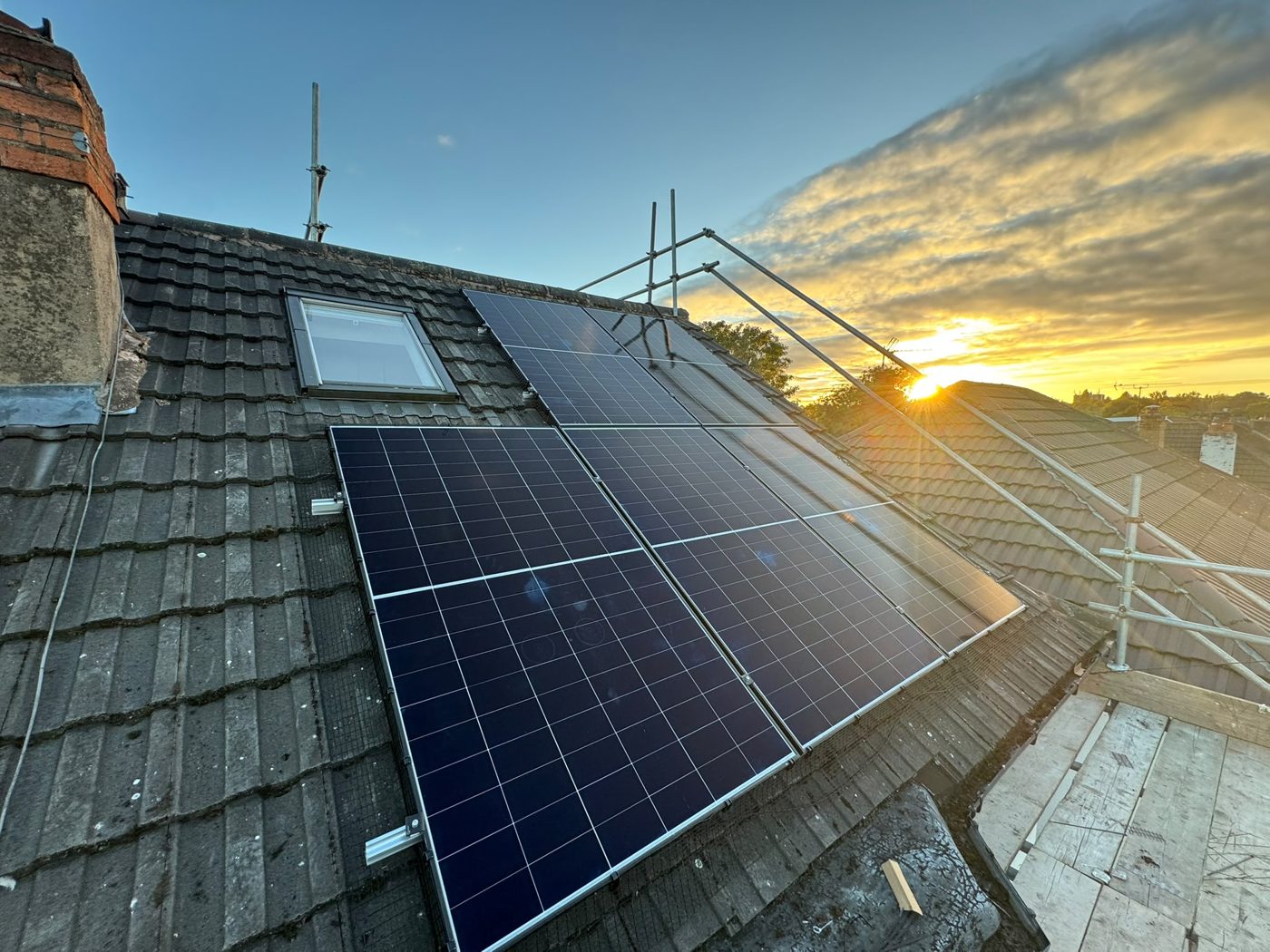
If you're thinking about solar, the first question is usually how many panels you need. The honest answer depends on three things: how much electricity your home uses, how much a system will generate where you live, and how much roof space you have. This guide walks you through each one.
Start with your electricity use
Look at your energy bills or your supplier's app for your yearly electricity use in kWh. Ofgem uses around 2,700kWh a year as the figure for a typical medium-use home, but your own number is what matters.
Your use will be higher if you work from home, have a larger family, charge an electric car or run a heat pump. It's worth checking before you get quotes, so you can compare systems properly.
How much a solar system generates
In most of England and Wales, each 1kW of panels on a good south-facing roof typically generates roughly 800 to 950kWh a year, a little more in the south and a little less further north. East- and west-facing roofs generate a bit less, and shade from chimneys or trees reduces output further.
So a 4kW system would usually produce somewhere around 3,200 to 3,800kWh a year: a good match for a typical home's yearly use. You won't use all of it at the moment it's generated, which is where a battery and the Smart Export Guarantee come in.
Panel numbers by system size
Modern home panels are usually rated at around 450 to 500 watts each. Here's roughly how that works out:
Figures are approximate. Exact panel numbers depend on the panel wattage, and generation depends on your roof direction, pitch, shading and location.
Check your roof space
Each panel takes up about 2 square metres. A 10-panel system needs roughly 20 square metres of clear roof, plus space around the edges. Windows, vents and chimneys all reduce the usable area.
If your main roof is small, panels can often be split across two roof faces, or fitted on a flat roof or garage. During the survey, your installer measures your roof and designs a layout that fits.
Adding a battery
Most homes use the most electricity in the evening, after the sun has gone down. A battery stores your spare daytime solar so you can use it later, instead of exporting it cheaply to the grid.
- A smaller system with a battery often gives better value than a bigger system without one.
- A battery can also charge overnight on a cheaper tariff.
- If you fit a hybrid inverter now, you can add a battery later.
Grid rules for bigger systems
If your inverter is 3.68kW or less (on a single-phase supply), your installer can usually connect it and notify your network operator afterwards. Larger systems need approval from the network operator before installation, which can take a few weeks. Your installer handles this paperwork for you.