
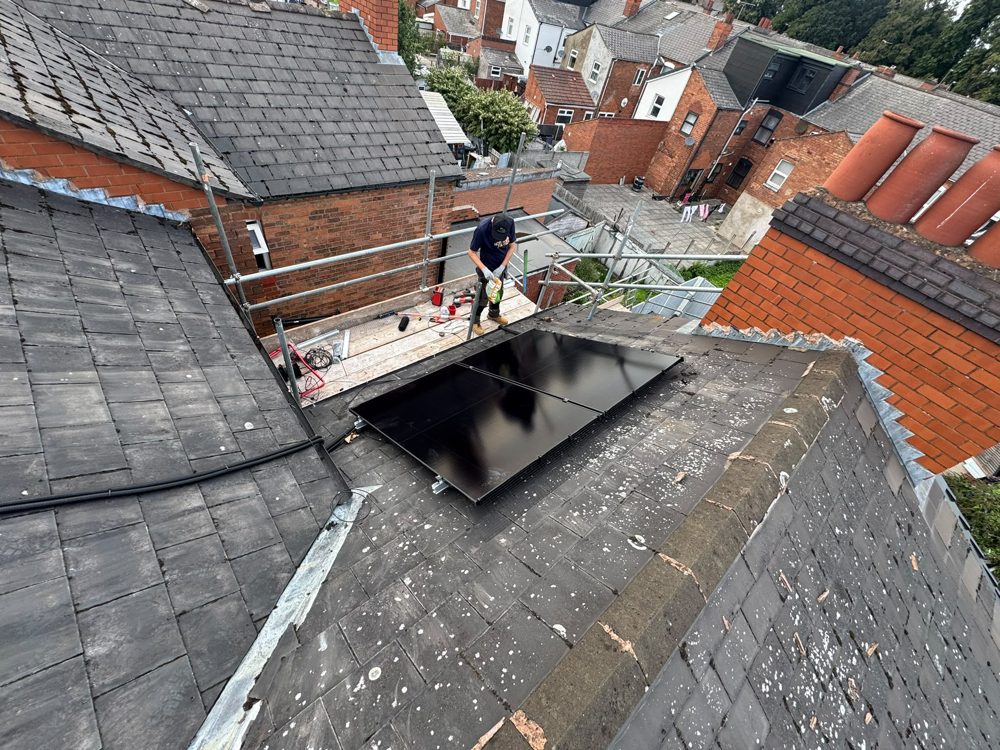
For most homes in England, you don't need planning permission to put solar panels on your roof. It's covered by what's called permitted development. There are a few exceptions, though, so it's worth knowing the basics.
What permitted development allows
Permitted development lets you install solar panels on a house without applying for planning permission, as long as certain conditions are met. The main ones are:
- Panels shouldn't stick out too far from the roof slope
- Panels shouldn't sit higher than the highest part of the roof, excluding the chimney
- Panels should be sited, as far as practical, to reduce the effect on how the building looks
The rules were updated in recent years to make some installations, such as panels on flat roofs, easier. Your installer should check the current rules for your home.
When you need to check
- Listed buildings: you'll need listed building consent
- Conservation areas and World Heritage Sites: extra rules can apply, especially for panels on walls or roofs facing a road
- Flats: you'll usually need the building owner's permission, and the rules can be different
- Ground-mounted panels: limits apply to size and position
If any of these apply, contact your local council's planning team before going ahead.
What about batteries?
A home battery installed inside your home, or in a garage, doesn't normally need planning permission.
Other rules
Even without planning permission, the installation must meet building regulations, and the electrical work must be done by a qualified installer. An MCS certified installer takes care of this and notifies your network operator.